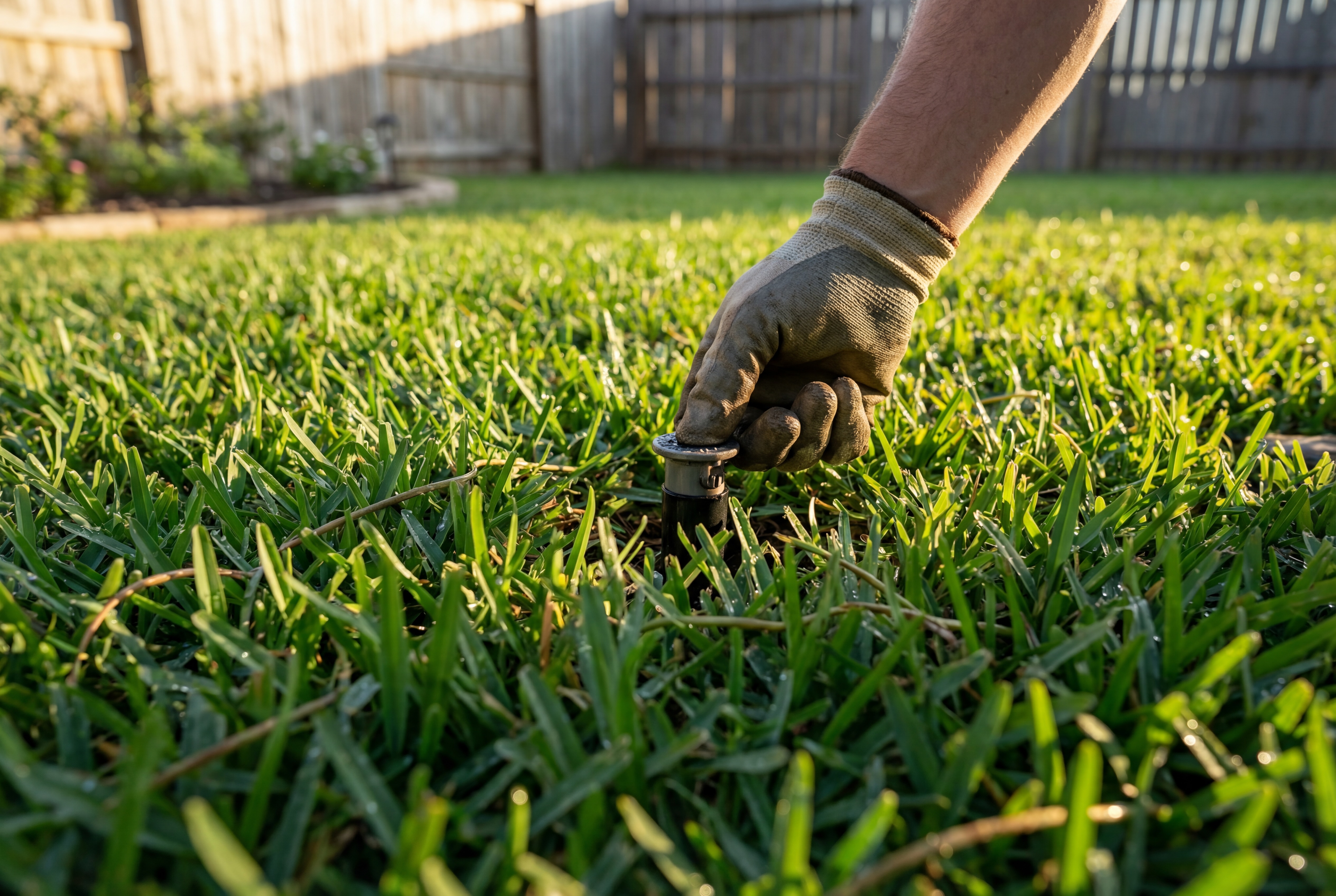
If your yard in Grapevine, Southlake, or Colleyville has shaded sections, a lush deep-green carpet texture, and broad flat grass blades — there's a good chance you're growing St. Augustine. It's one of the most popular warm-season turfgrasses in the DFW area, and when it's properly maintained, it produces exactly the kind of thick, full, dark green lawn that makes a North Texas property stand out.
But St. Augustine is also one of the most misunderstood — and frequently mismanaged — grasses in the region. It has specific mowing requirements that differ significantly from Bermuda, it's more vulnerable to certain pests and diseases, and it responds badly to several of the most common lawn care mistakes Grapevine homeowners make. Understanding how St. Augustine actually behaves through each season in North Texas is the foundation for keeping it healthy and looking its best.
This guide covers everything you need to know about St. Augustine grass care in Grapevine and the DFW area — season by season, with practical detail on the issues that matter most.
St. Augustine grass earned its place in the DFW area for several reasons. Most importantly, it's the most shade-tolerant warm-season turfgrass available for North Texas lawns. While Bermuda needs a minimum of 8 hours of direct sunlight per day to perform well, St. Augustine can thrive with 5 to 6 hours — making it the practical choice for any Grapevine or Southlake yard with established tree canopy or structures that create shade for part of the day.
Beyond shade tolerance, St. Augustine produces a dense, lush growth habit that crowds out weeds effectively when properly maintained. It tolerates a wide range of soil types, handles North Texas heat reasonably well when watered correctly, and creates the kind of carpet-like appearance that homeowners in high-standard communities like Southlake and Colleyville expect.
The tradeoffs are worth knowing upfront. St. Augustine is more susceptible to certain fungal diseases and insect pests than Bermuda. It does not tolerate heavy foot traffic as well. It cannot be established from seed — St. Augustine lawns are always installed from sod or plugs. And it requires more precise management than many homeowners realize, particularly around mowing height, watering depth, and fertilization timing.
St. Augustine in North Texas begins breaking dormancy in March as soil temperatures climb and overnight lows stay consistently above 50°F. The lawn will transition from brown to green over several weeks, typically reaching full green-up by mid-to-late April depending on the year.
Mowing Height: The Most Critical DetailSt. Augustine should be maintained between 2.5 and 4 inches throughout the growing season — significantly higher than Bermuda grass. This is not optional. Cutting St. Augustine too short is one of the most damaging things you can do to it. Scalped St. Augustine loses its shade tolerance, becomes thin and patchy, and opens the door to weed invasion, pest pressure, and disease. The 1/3 Rule applies strictly here: never remove more than one-third of the grass blade in a single mowing. For a lawn maintained at 3 inches, that means mowing again before it reaches 4.5 inches.
Begin mowing in spring once the grass shows consistent new growth — typically in March. Do not mow dormant or semi-dormant turf. As growth accelerates through April and May, mowing frequency increases. Most St. Augustine lawns in Grapevine and Southlake need weekly mowing by May.
Pre-Emergent ApplicationSpring is the window to get ahead of summer weeds. Apply pre-emergent herbicide when soil temperatures consistently hit 55°F — in the Grapevine area, that typically falls in late February through early March. Missing this window means fighting crabgrass, goosegrass, and other summer annual weeds reactively for the rest of the season. Always verify that the product you use is labeled safe for St. Augustine — some herbicides that work on Bermuda can damage St. Augustine turf.
Watch for Take-All Root Rot (TARR) in SpringTake-All Root Rot is a fungal disease primarily active in spring (April and May) and fall when temperatures are mild. It attacks the root system and stolons of St. Augustine grass, causing yellowing, thinning, and large irregular patches of dying turf. The critical identifying symptom: affected grass pulls up easily from the soil because the roots have rotted. TARR can spread aggressively if not addressed and is one of the most damaging diseases affecting St. Augustine lawns in the DFW area. Conditions that encourage TARR include excessive thatch buildup, heavy shade, overwatering, and soil compaction — making proper cultural practices the most important line of defense.
Summer is when St. Augustine is in peak growth — and also when it faces its greatest threats. The combination of intense North Texas heat, increased irrigation needs, and optimal conditions for both fungal disease and insect pests makes summer the season that separates well-managed St. Augustine lawns from struggling ones.
Mowing Through Peak SeasonContinue weekly mowing at the 2.5-to-4-inch range through the summer months. Sharp mower blades matter more for St. Augustine than almost any other turf. Dull blades tear the broad, flat grass blades rather than cutting them cleanly, leaving frayed edges that turn brown and create entry points for disease. A professional lawn care service maintains sharp equipment — this detail alone makes a visible difference in how a St. Augustine lawn looks after every mow.
Watering: Deep and InfrequentSt. Augustine needs approximately 1 inch of water per week during the growing season, split into two or three watering sessions rather than daily shallow passes. Deep, infrequent watering drives root development down into the soil profile, building the drought resistance St. Augustine needs to get through a North Texas summer. Water early in the morning — evening watering leaves the lawn wet overnight, which is one of the primary conditions that triggers and accelerates fungal diseases like brown patch and gray leaf spot.
Watch for Chinch BugsChinch bugs are one of the most destructive pests St. Augustine lawns face in the Grapevine and DFW area — and they show up in the hottest part of summer. They feed by injecting a toxin into grass blades that prevents water movement, causing the turf to turn yellow and then brown in expanding patches that resist watering. Chinch bug damage is most common in the sunniest, hottest parts of the yard — areas near driveways, sidewalks, and south-facing exposures. If your St. Augustine looks like it needs water but doesn't respond to irrigation, get down and check the turf line. Chinch bugs are small (roughly the size of a BB, black with white wing markings) and fast-moving, but visible in the transition zone between healthy and damaged grass. Left untreated, they can kill large sections of St. Augustine in a matter of weeks.
Gray Leaf Spot: A Summer Fungal ThreatGray leaf spot is a warm-season fungal disease that appears primarily in summer, creating diamond-shaped gray-brown lesions on the grass blades. It thrives in warm, humid conditions and is significantly accelerated by nitrogen fertilizer. Avoid applying high-nitrogen fertilizer to St. Augustine between mid-June and early September if you've had gray leaf spot issues in the past. Over-fertilizing during summer on a lawn prone to gray leaf spot can turn a manageable problem into a severe one quickly.
Fertilization Timing in SummerFertilize St. Augustine between April and September — the active growing season. Begin fertilization 3 weeks after the grass greens up in spring and continue every 6 to 8 weeks through summer. Do not fertilize during extreme heat or drought stress. Like Bermuda, St. Augustine cannot efficiently absorb nutrients when it's already under stress, and improper summer fertilization increases the risk of fungal disease.
As temperatures cool in October and November, St. Augustine begins slowing its growth and moving toward dormancy. Fall care decisions directly impact how your lawn comes out of dormancy in spring.
Brown Patch SeasonBrown patch fungus is a cool-weather disease that typically appears in early fall — often following the first significant rain after summer heat. It creates circular or semi-circular patches of discolored turf, and affected grass blades can be easily slipped from the stolon because the fungus rots the base of the blade. Brown patch is most active during transitional weather with warm days, cool nights, and increased moisture. Proper fall watering technique — morning only, no evening irrigation — is the most important cultural practice for limiting brown patch pressure.
Final Fertilization WindowStop applying nitrogen fertilizer at least 6 weeks before the first expected frost in the Grapevine area. Fertilizing too late in fall pushes tender new growth that's highly vulnerable to freeze damage and sets the lawn up for disease problems heading into winter.
Leaf RemovalSt. Augustine entering dormancy is particularly vulnerable to leaf accumulation. Leaves matted against the turf through winter trap moisture, block sunlight from reaching the crowns, and create favorable conditions for the disease issues that become visible in spring. Professional fall leaf removal protects your St. Augustine through the dormant season.
St. Augustine goes fully dormant when soil temperatures drop below 50°F, turning tan to brown. This is normal — not a sign of a dead or unhealthy lawn. Minimize foot traffic on dormant St. Augustine, stop irrigation and fertilization, and keep leaves and debris off the turf. The lawn will green up in spring as conditions warm.
One genuine winter risk for St. Augustine in North Texas is severe freeze damage. Floratam, one of the most common St. Augustine varieties, is notably cold-sensitive and can be killed by hard freezes that more cold-tolerant varieties survive. If your St. Augustine lawn is slow to green up in spring or shows large areas of turf that never come out of dormancy after a cold winter, freeze damage may have occurred and resodding affected areas may be necessary.
The details that keep St. Augustine healthy and looking sharp in the Grapevine and Southlake area require consistent attention throughout the growing season. Correct mowing height every single visit, properly timed edging that doesn't scalp the wide St. Augustine blade at the bed line, and consistent eyes on the turf that can flag early signs of chinch bug activity, disease development, or turf stress before those problems compound — all of that comes from a professional lawn care company that knows North Texas turf.
Texterra Lawn & Landscaping maintains St. Augustine lawns across Grapevine, Southlake, and Colleyville with the detail and consistency that this grass type requires. Every visit includes mowing at the correct height for your specific turf, hard-edge edging done with the care that St. Augustine's broader blade demands, complete trimming and blow-off, and a turf health check that catches developing issues early.

Ready to get your St. Augustine lawn the expert care it needs in Grapevine or Southlake? Request a free estimate from Texterra Lawn & Landscaping and get weekly maintenance built around the specific requirements of your North Texas turf.