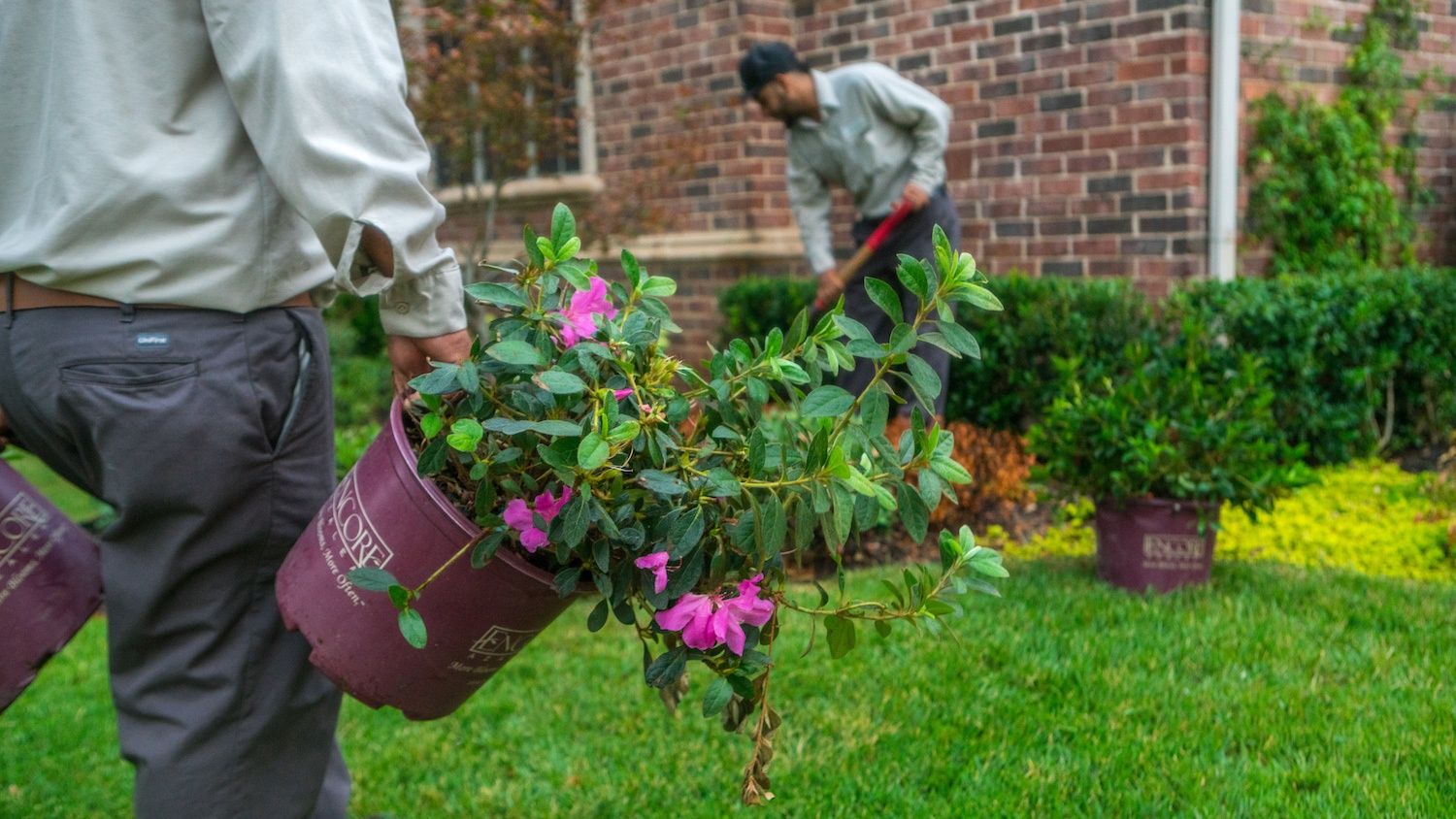
Spring in the DFW area moves fast. One week your Bermuda lawn is brown and dormant, and two weeks later growth has kicked in and you're already behind. For Grapevine and Southlake homeowners, the 8 to 10 week window between late February and early May is the most important stretch of the entire lawn care year — what you do in this window directly determines how your property performs through the full growing season.
Miss the pre-emergent window and you spend the summer battling crabgrass. Fertilize too early and you push growth the turf can't support. Scalp your Bermuda at the wrong height and it takes weeks to recover. Get all of it right, and your lawn enters summer dense, healthy, and set up to look its best from May through October.
This is the complete spring lawn care checklist for North Texas properties — what to do, when to do it, and why each step matters for the warm-season grasses common across Grapevine, Southlake, and Colleyville.
Before you mow, treat, or fertilize a single inch of your lawn, spend 10 minutes walking your entire property with fresh eyes. North Texas winters — even mild ones — leave behind issues that won't fully reveal themselves until growth resumes. A late freeze, extended dry period, or unusual cold snap can leave patches of turf that won't green up, thatch buildup that needs to be addressed, and bed areas that need resetting before spring planting begins.
What to look for on your spring walkthrough: areas of turf that look gray or matted rather than just brown and dormant, thin patches along southern exposures or near concrete where winter stress is most intense, bed edges that have lost definition over winter, and any storm debris or leaf accumulation still sitting on turf or in beds.
This walkthrough tells you exactly what your property needs before the growing season begins — and catches problems early enough to address them before they compound.
Nothing determines how your summer lawn looks more than whether you catch the pre-emergent window in spring. This is the single step that most Grapevine homeowners either nail or miss — and the consequences of missing it last the entire season.
Pre-emergent herbicides work by creating a barrier in the soil that prevents weed seeds from germinating. They have zero effect on weeds that have already sprouted. This means the application must go down before crabgrass, goosegrass, spurge, and other summer annual weeds begin to germinate — not after you see them.
In the DFW area, the trigger is soil temperature, not the calendar. When soil temperatures consistently reach 55°F at a 4-inch depth, crabgrass seeds are preparing to germinate. That's when pre-emergent needs to be in the ground and watered in. In the Grapevine area, that window typically falls between late February and mid-March — but it varies year to year. Applying based on calendar date alone misses the actual biological trigger.
The challenge of DIY pre-emergent application in North Texas is exactly this timing dependency: applied too early and it loses effectiveness before full weed pressure arrives; applied too late and the seeds have already germinated. Getting this right requires monitoring soil temperatures, not just watching the calendar.
Once pre-emergent is applied and watered in, mowing does not remove the barrier — it forms below the soil surface, not on the grass blades. You can mow normally after the product has been watered in.
If your Grapevine or Southlake property has Bermuda grass, a spring scalp is one of the most valuable things you can do for your lawn in late February or early March. A spring scalp is a single mowing at a lower-than-normal height that removes the dead, matted winter material sitting on top of the turf surface.
That layer of dead material — left over from the previous season's dormancy — blocks sunlight from reaching the grass crown and slows green-up considerably. Removing it in a single pass allows sunlight to hit the soil surface directly and accelerates the transition from brown dormant turf to actively growing green grass by days to weeks.
After the scalp, gradually raise your mowing height back to the 1 to 2 inch summer range over the following weeks rather than jumping straight there. Bag your clippings from the scalp pass to remove the debris cleanly.
St. Augustine should not be aggressively scalped — drop the mowing height one notch from your normal setting at most. St. Augustine is more cold-sensitive and should be treated more carefully during the early spring transition period.
The instinct to mow as soon as any green appears is understandable, but mowing too early on turf that hasn't fully broken dormancy puts stress on a lawn that is still gathering resources for the season's growth push.
For Bermuda grass in Grapevine, wait until the lawn has greened up substantially and is actively pushing new growth — not just showing the first tips of green. For St. Augustine and Zoysia, which green up more gradually, patience pays off. Mowing dormant or semi-dormant turf stresses the crown and slows recovery.
When you do begin mowing for the season, sharpen your blades first if you haven't already. Dull blades tear grass rather than cutting it cleanly, leaving frayed brown tips that invite disease and make even a freshly mowed lawn look dingy. This is one of the most overlooked details of spring lawn care — and one of the most visible.
Begin with the correct height for your grass type and maintain it consistently through the season: 1 to 2 inches for Bermuda, 2.5 to 4 inches for St. Augustine.
Fertilizing too early in spring is one of the most common and damaging mistakes North Texas homeowners make. Applying nitrogen to a lawn that isn't actively growing feeds weeds instead of grass, pushes weak growth the turf can't sustain, and can increase disease risk rather than supporting turf health.
The right window for spring fertilization in the Grapevine area is when your lawn is consistently green and has been mowed at least twice — indicating that it's genuinely in active growth mode. For Bermuda, this is typically April. For St. Augustine, a few weeks after it fully greens up, beginning fertilization approximately three weeks after the grass turns green.
North Texas soils are known to be lower in nitrogen than many other regions, making fertilization an important part of keeping Bermuda and St. Augustine lawns dense and deeply colored. Use a slow-release nitrogen formula where possible — it delivers nutrients gradually rather than pushing a burst of growth that demands more frequent mowing and is harder on the turf.
Never fertilize during drought stress or when temperatures are already extreme. Your lawn can't absorb and use what you're applying under stress conditions, and the risk of fertilizer burn increases significantly.
Spring is the reset window for your landscape beds. Winter debris, dead annual plants, broken-down mulch, and weeds that got a head start through the mild season all need to be cleared before new growth fills in and makes the job harder.
A professional spring bed cleanup clears all of that, redefines bed edges that have softened over winter, and prepares the bed surface for fresh mulch installation. Fresh mulch applied in spring — a clean 2-to-3-inch layer of properly selected material — protects root systems through the intense Grapevine summer, retains soil moisture, suppresses weed seed germination, and gives beds the defined, polished appearance that elevates the entire property's curb appeal.
The ideal mulch window in North Texas is April through May — after the last frost risk has passed and before the most intense summer heat arrives. This positions your beds perfectly for the growing season ahead.
Once the last frost risk has passed in the DFW area — typically mid-March — warm-season annuals can go into the ground. Lantana, vinca, salvia, marigolds, and knockout roses are proven performers in North Texas heat and create immediate visual impact in high-visibility areas like front entry beds, mailbox surrounds, and driveway borders.
Plant selection matters as much as timing here. Plants that aren't suited to North Texas heat and clay soils will struggle through summer regardless of how carefully they're installed. The right varieties, placed in the right locations, with properly prepared bed soil, will carry color and presence through September with minimal intervention.
By May, Bermuda grass in Grapevine is in full active growth and requires weekly mowing at minimum to stay within the 1/3 Rule and maintain the dense, tight appearance that sets well-maintained North Texas properties apart. St. Augustine also enters peak growth through May and needs consistent weekly attention.
This is where consistency becomes everything. A lawn that gets mowed every 5 to 7 days through May, June, July, August, and September stays dense, healthy, and visually sharp. A lawn that gets mowed when it's convenient — skipping visits, cutting too much at once — struggles all season and never quite recovers between catches.
If managing this schedule consistently through a North Texas summer sounds like more than you want to take on, this is exactly the problem that professional weekly lawn care solves.
Every step in this spring checklist is something Texterra Lawn & Landscaping executes for properties across Grapevine, Southlake, and Colleyville. Spring cleanup, mulch installation, seasonal color planting, first mowing of the season, and the transition into consistent weekly maintenance — we handle all of it with the timing and detail that North Texas properties require.
You don't have to manage the calendar, track soil temperatures, or wonder whether you caught the pre-emergent window. We handle the entire spring setup and carry that same standard through the full growing season.

Ready to get your Grapevine property set up right for the growing season? Request a free estimate from Texterra Lawn & Landscaping and we'll build a spring plan tailored to your property's specific needs.