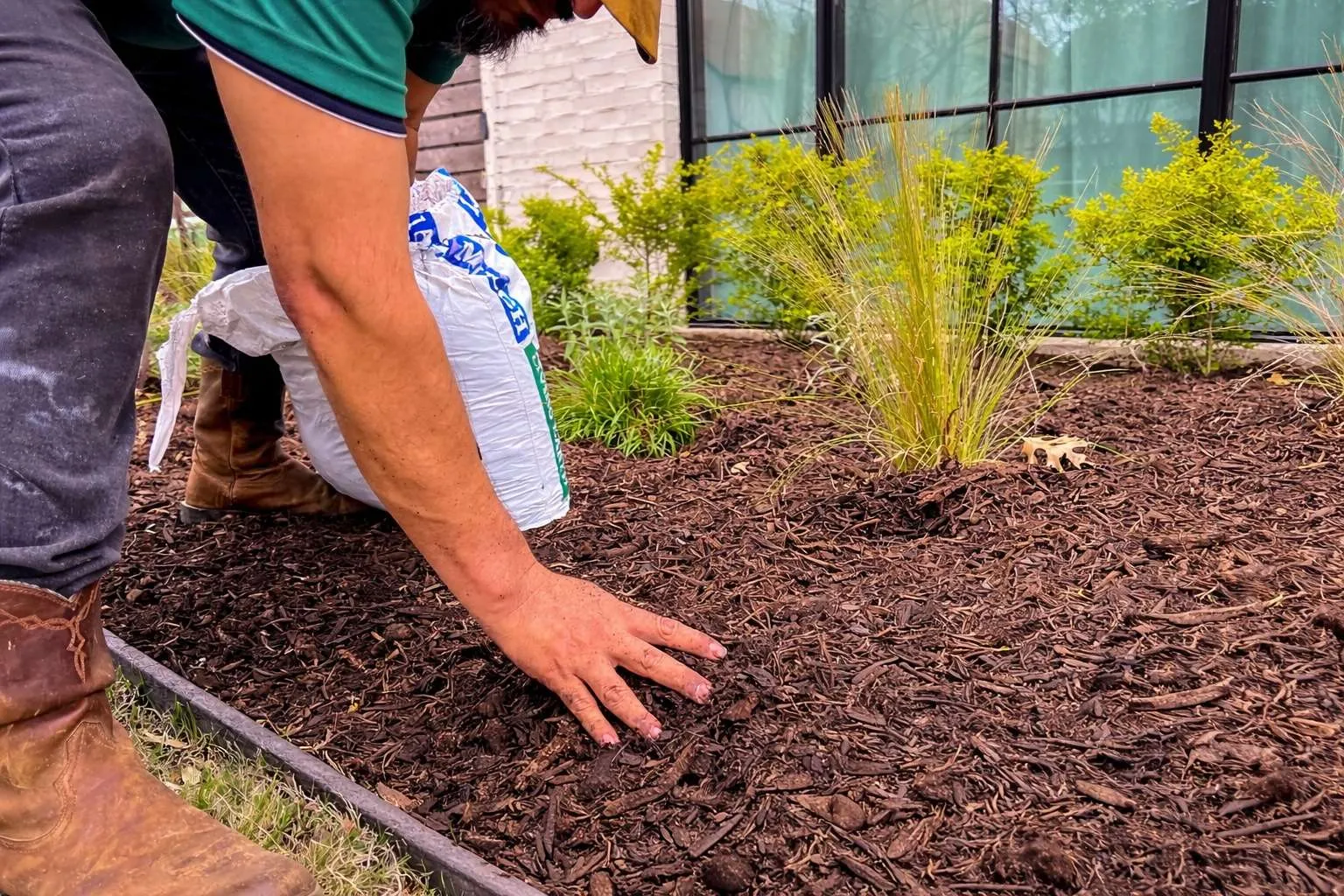
Fresh mulch is one of the highest-impact, lowest-cost landscape improvements a Grapevine homeowner can make. A professional mulch installation transforms beds that look tired and exposed into a clean, intentional, finished landscape — and it does it quickly, in a single service visit. But the impact of mulch goes far beyond appearance.
In North Texas, where summer temperatures regularly exceed 100°F, where prolonged drought is common, and where the clay-heavy soils common across Grapevine, Southlake, and Colleyville dry out and crack without adequate coverage, a fresh layer of quality mulch in your landscape beds does real work. It keeps soil moisture in the ground rather than evaporating into the heat. It insulates root systems from extreme temperature swings. It suppresses weed germination in your beds. And it gives the finished, polished look that separates a professionally maintained landscape from one that's merely been mowed.
This guide covers everything Grapevine homeowners need to know about mulch installation — the benefits, the timing, how to apply it correctly, and which types work best for North Texas landscape beds.
Mulch is applied to the surface of landscape beds, around the base of trees and shrubs, and in transition areas between turf and planting areas. Depending on the property, it may go in formal foundation beds, naturalized areas, or around individual specimens. What it does in all of these locations is the same: it creates a protective layer between the exposed soil and the conditions above it.
Moisture RetentionThis is the most critical benefit in a North Texas climate. When soil is exposed to summer heat and direct sunlight, moisture evaporates rapidly. A 2-to-3-inch layer of mulch dramatically slows that evaporation, keeping moisture in the root zone of your plants and reducing how frequently your beds need watering. During Grapevine's hot summers — when watering restrictions frequently limit how often irrigation can run — that retained moisture makes a meaningful difference in the health and appearance of your beds.
Temperature RegulationNorth Texas soil temperatures can swing from freezing to heat-stressed within the same season. Mulch acts as insulation in both directions — moderating soil temperature in summer to protect roots from heat stress, and providing a buffer in winter to protect root systems from freeze damage. For perennials, shrubs, and newly installed plants, this temperature moderation directly improves survival rates through seasonal extremes.
Weed SuppressionMulch blocks sunlight from reaching the soil surface, which is required for most weed seeds to germinate. A proper 2-to-3-inch layer of mulch significantly reduces the weed pressure in your beds by preventing germination before it begins. It won't eliminate all weed activity — seeds that blow in on the surface can still germinate above the mulch layer — but it dramatically reduces the frequency and severity of weed growth compared to bare soil.
Soil Health Over TimeOrganic mulches — hardwood, cedar, and similar products — break down gradually and return nutrients and organic matter to the soil as they decompose. For the clay-heavy soils common across Grapevine and Colleyville, this slow organic amendment improves soil structure over time, making it easier for plant roots to establish, improving drainage, and increasing the nutrient availability in your beds without any additional treatment.
Curb Appeal — The Most Immediate BenefitFresh mulch delivers an instant visual transformation. It gives beds a clean, uniform background that makes plantings pop, defines edges, and signals intentional maintenance. In neighborhoods across Southlake and Grapevine where curb appeal is taken seriously, fresh mulch in spring is one of the most visible markers of a professionally maintained property.
The most popular and strategically important time to apply mulch in North Texas is spring — typically March through May. Spring mulch installation accomplishes two things simultaneously: it refreshes the appearance of beds heading into the peak outdoor living season, and it puts a protective layer in place before summer heat arrives to lock in soil moisture and moderate temperatures through the hottest months of the year.
Spring is also the right time to mulch because beds have typically been cleared of winter debris, plants are beginning new growth, and the fresh application creates the ideal growing environment for the season ahead. Mulching directly before or alongside spring cleanup and seasonal color planting is the standard sequence that produces the best results.
A second application in fall — typically October — makes sense for properties with significant bed coverage. Fall mulch replenishes what has broken down over the growing season, provides root system insulation heading into winter, and suppresses the cool-season weed germination that would otherwise take hold as temperatures drop and warm-season turf goes dormant.
For most Grapevine and Southlake properties, one annual spring application maintained at the correct depth handles the year effectively. Properties with larger bed areas or significant shade and moisture variation may benefit from a fall refresh as well.
The target depth for mulch in North Texas landscape beds is 2 to 3 inches. This depth is thick enough to suppress weed germination, retain meaningful soil moisture, and moderate soil temperature — but not so deep that it restricts the flow of water, oxygen, and air to plant roots.
Below 2 inches, mulch loses most of its functional benefits. The weed suppression becomes minimal, moisture retention drops, and the temperature moderation effect largely disappears. Above 3 inches, you risk creating conditions that prevent adequate water and air from reaching root systems and potentially promote rot at the base of shrubs and tree trunks.
The most important installation detail — and the one most commonly done incorrectly — is keeping mulch away from the base of plants, shrubs, and trees. Mulch piled directly against plant stems and tree trunks creates the constant moisture contact that promotes rot, invites disease, and can structurally damage plants over time. A 2-to-3-inch gap between the mulch and the base of any plant stem is standard practice.
If existing mulch is still present from a previous application, check the current depth before adding more. In most cases, a light top-dress to restore depth to the 2-to-3-inch target is all that's needed — not a full replacement.
Several mulch types are commonly used across North Texas landscapes, and each has its appropriate applications. Here's the straightforward guide to what works well in Grapevine and the surrounding communities.
Shredded Hardwood Mulch (Natural Brown)This is the most widely used mulch across North Texas residential properties, and for good reason. Shredded hardwood is affordable, widely available, and performs well across all of the core mulch functions — moisture retention, temperature moderation, and weed suppression. It breaks down over a season, gradually returning organic matter and nutrients to the soil, and its natural brown color complements virtually every planting style and home exterior. For most Grapevine and Colleyville properties, natural shredded hardwood is the practical default choice and delivers excellent results.
Dyed Black or Brown Hardwood MulchDyed hardwood mulch uses the same shredded hardwood base with food-grade, non-toxic colorant applied. Black mulch delivers a striking, high-contrast appearance against the green of plantings and the warm tones of brick and stone common in Grapevine and Southlake homes. Brown dyed mulch provides a richer, more uniform appearance than natural hardwood while maintaining a natural aesthetic. Dyed mulches hold color longer than natural hardwood — particularly useful for properties where fresh appearance is a priority. Quality matters here: reputable mulch products use non-toxic, biodegradable colorants that do not harm soil or plants. Avoid products made from recycled pallet wood, which can contain chemical residue.
Cedar MulchCedar has natural oils that give it a distinctive aroma and a degree of insect-repelling properties. It breaks down more slowly than hardwood, making it longer-lasting and requiring less frequent replacement. Cedar is a good choice for areas near the foundation of the home, in naturalized areas adjacent to greenbelts, or in beds where a lower-maintenance, longer-lasting mulch is the priority. It typically costs more than hardwood but requires less frequent refreshing, which can offset the price difference over time.
What to AvoidRubber mulch is not recommended for residential landscape beds in North Texas. It doesn't contribute organic matter to the soil, retains significant heat (which can stress plants during Texas summers), and may contain chemical residues from manufacturing. Rock or gravel mulch is appropriate in desert-style plantings or in areas where organic mulch would wash away, but it does not provide the moisture retention, temperature moderation, or soil-building benefits of organic mulch — and it permanently changes the character of a bed in ways that are difficult to undo.
Professional mulch installation includes proper bed preparation, not just mulch delivery. Before fresh mulch goes down, beds should be hand-weeded to remove existing weeds by the root — mature weeds covered by mulch will continue growing through it. Bed edges should be defined cleanly so there's a crisp separation between the mulch area and the surrounding turf. And any debris, dead plant material, or old degraded mulch that has compacted to the point of restricting drainage should be cleared.
Applying fresh mulch over weeds, compacted old material, and undefined edges saves time but sacrifices most of the visual and functional benefit. Professional installation that includes bed prep as part of the service produces results that hold up through the season rather than looking fresh for two weeks.
Texterra Lawn & Landscaping installs mulch in landscape beds across Grapevine, Southlake, and Colleyville as part of our seasonal service offerings. Spring mulch installation is one of the most-requested seasonal services we provide — typically scheduled as part of a full spring cleanup and property reset that includes bed clearing, edge definition, and fresh mulch installation in a single coordinated visit.
For ongoing maintenance clients, spring mulch is typically added to the annual service calendar so it happens at the right time without you having to remember to schedule it. For new clients who need a spring bed refresh, a standalone mulch installation quote is simple to get: request an estimate, confirm the scope, and we schedule and execute.
The result is the same either way — fresh, properly installed mulch at the correct depth, with clean bed edges and the visual impact that makes the entire property look sharper from the moment it's done.

Ready to refresh your Grapevine or Southlake landscape beds with professional mulch installation? Request a free estimate from Texterra Lawn & Landscaping and get your spring beds looking sharp before the heat arrives.