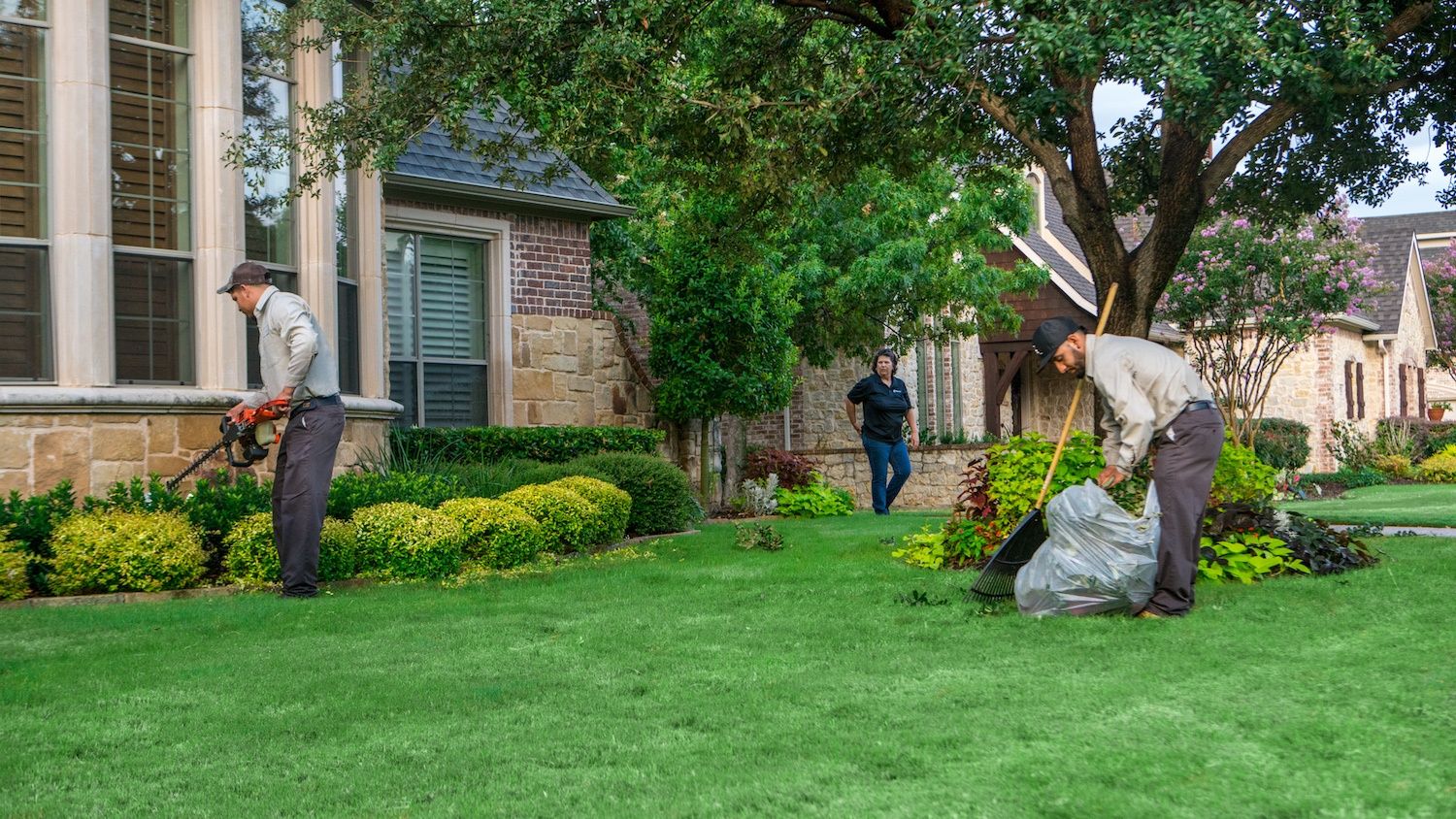
Fall in North Texas is one of the most important — and most underestimated — windows in the entire lawn care year. Most Grapevine homeowners think of fall as the wind-down season, the time when lawn care gets easier as temperatures drop and growth slows. In reality, what you do between September and November sets the foundation for how your property looks next spring and summer.
Miss the fall pre-emergent window and you spend winter fighting henbit and annual bluegrass while they establish root systems under your dormant turf. Skip the final fertilization and your Bermuda or St. Augustine enters dormancy without the root reserves it needs for a strong spring green-up. Let leaves accumulate on your lawn and you head into winter with moisture-trapping, disease-inviting buildup sitting on turf that's already stressed.
This is the complete fall lawn care checklist for North Texas properties — everything Grapevine, Southlake, and Colleyville homeowners need to do this fall, when to do it, and why each step protects the investment you've made in your lawn all year.
The first fall lawn care mistake most homeowners make is stopping mowing too early. Warm-season grasses in North Texas — Bermuda and St. Augustine — continue growing through September and into October as long as temperatures support active growth. Stopping mowing before growth actually stops allows turf to go into dormancy taller than ideal, which creates several problems.
Taller grass entering dormancy means more dead material to deal with in spring, a greater risk of disease developing in the matted layer, and a property that looks unkempt through the fall and winter months. Continue mowing on your normal schedule as long as the grass is actively growing.
As growth slows in late October and early November, gradually lower your mowing height on the final two cuts of the season. Dropping to a slightly lower setting on the last mows allows more sunlight to reach the crown of the grass as it goes dormant — which reduces the amount of dead brown material that sits on the surface through winter and accelerates spring green-up. For Bermuda, this means finishing at the lower end of the 1-to-2-inch range. For St. Augustine, drop one setting but don't go below 2.5 inches.
Most Grapevine homeowners know about spring pre-emergent applications for crabgrass. Far fewer realize that fall pre-emergent is equally important — and that skipping it means spending the following spring dealing with a flush of cool-season weeds that have been developing underground all winter.
Fall pre-emergent targets cool-season annuals like annual bluegrass (poa annua), henbit, and chickweed — the weeds that germinate as soil temperatures drop and establish through winter, becoming visible and problematic by early spring. In North Texas, these seeds begin germinating when soil temperatures drop to around 70°F, which typically occurs in September through October in the Grapevine area.
The fall pre-emergent window is September through mid-October. Apply when soil temperatures are consistently at or just below 70°F — too early and the product loses effectiveness before the germination window; too late and seeds have already sprouted. Like spring pre-emergent, timing is triggered by soil temperature, not calendar date, and it must go down before germination occurs to be effective.
A properly timed fall pre-emergent application creates a barrier that protects your lawn through winter and dramatically reduces the weed pressure you'll face in spring — making your spring lawn care program far easier and more effective.
While your Bermuda or St. Augustine grass blades are slowing their visible growth in fall, something important is still happening below the surface. Root systems continue growing actively through September and October when soil temperatures remain in the 65-75°F range — and the nutrients you provide during this window directly impact how strong your turf's root system is when it goes dormant and how quickly it recovers in spring.
The fall fertilization window in Grapevine is September through early October. The goal is strengthening roots and improving cold tolerance — not pushing top growth. A fertilizer high in potassium and moderate in nitrogen serves this purpose well. Potassium strengthens grass against temperature extremes, disease pressure, and drought — all challenges North Texas turf faces through fall and winter.
Do not fertilize after early October in the Grapevine area. The average first frost date for the DFW area falls in mid-November, and fertilizing too late in fall pushes tender new blade growth that is highly susceptible to freeze damage. Late nitrogen application heading into winter increases disease risk and can weaken the turf you're trying to protect. The cutoff is firm: apply by early October or skip it for the season.
Fall in Grapevine is beautiful — and it generates a significant amount of leaf accumulation, particularly on properties with established tree canopy. What those leaves do to your lawn if left unmanaged is a problem that won't fully reveal itself until spring.
A thick layer of leaves matting down on dormant or semi-dormant turf traps moisture, blocks the limited fall sunlight from reaching the grass crown, and creates the warm, moist, stagnant conditions that fungal diseases like brown patch thrive in. Leaf accumulation over dormant St. Augustine is particularly problematic — the thin, broad blades mat together easily and the moisture retention dramatically increases the risk of disease developing through winter that becomes visible as bare, damaged patches in spring.
Leaf removal in North Texas isn't a one-time event. Properties with multiple trees in Grapevine or Southlake may need multiple passes as leaves drop through October and November. The goal is to keep your lawn consistently clear — not to wait until all leaves have fallen and attempt one large cleanup. The longer leaves sit on dormant turf, the greater the damage risk.
At Texterra, fall leaf removal is part of our seasonal service offering specifically because North Texas properties with established canopy need consistent attention through fall, not a single end-of-season pass.
Fall is the right time to reset your landscape beds before winter arrives. Pulling spent summer annuals, cutting back perennials that have gone dormant, clearing debris from bed surfaces, and redefining bed edges that have softened over the growing season all make a significant difference in how your property looks through winter — and how much work spring cleanup requires.
A fall mulch refresh is also worth doing on Grapevine and Southlake properties that had mulch applied in spring. Mulch breaks down naturally over a growing season, and a light top-dress in fall restores the protective depth — insulating root systems through winter temperature swings and giving beds the clean, finished appearance that holds your property's curb appeal through the off-season.
Fall mulch also suppresses cool-season weed seeds that germinate in beds, reducing the workload of your spring cleanup and giving seasonal plantings a clean, weed-free surface to establish in.
Two common fungal diseases affect North Texas lawns in fall and deserve attention during this transition period.
Brown Patch typically appears in early fall — often following the first significant rain after summer heat breaks. It creates circular or semi-circular patches of discolored turf on St. Augustine and Bermuda lawns, and affected St. Augustine blades can be slipped easily from the stolon at the base. Brown patch is most active when days are warm, nights are cool, and moisture is elevated — exactly the conditions of a North Texas fall. Morning-only watering (never evening) is the most important cultural practice for limiting brown patch pressure in fall.
Take-All Root Rot (TARR) is also active in fall on St. Augustine lawns when temperatures are mild and soils are moist. Watch for yellowing patches where grass pulls up easily from the soil — the root system signature of TARR rather than surface blade diseases. Proper fall drainage, appropriate watering practices, and avoiding excessive thatch buildup are the cultural defenses against TARR developing or spreading heading into winter.
As your Bermuda or St. Augustine lawn fully enters dormancy in November or December, a final property reset from Texterra ensures your Grapevine home heads into winter looking sharp and properly prepared.
This includes a final leaf removal pass, complete hard surface blow-off, bed grooming and edge cleanup, and a thorough inspection of the property to flag any issues — turf damage, drainage concerns, or structural edge issues in beds — that are better addressed now than discovered in spring.
A property that enters winter looking clean and well-maintained is a property that comes out of winter with a much smaller spring cleanup requirement and a faster path to looking its best as green-up begins.
Every step in this fall checklist is something Texterra Lawn & Landscaping handles for properties across Grapevine, Southlake, and Colleyville. Fall leaf removal, bed cleanup and mulch refresh, ongoing weekly maintenance through the end of the growing season, and a final property reset that sends your lawn into winter properly prepared — we manage all of it with the timing and attention to detail that North Texas properties require.
You don't have to track soil temperatures, monitor the pre-emergent window, or wonder whether your lawn is getting what it needs before dormancy. Texterra handles the fall transition with the same standard we bring to every visit all season long.

Ready to get your Grapevine property set up right before winter? Request a free estimate from Texterra Lawn & Landscaping and get a fall service plan tailored to your lawn and landscape.