.webp)
Fall can give North Texas lawns relief from summer heat, but cooler, wetter conditions can also bring turf disease. Brown patch fungus in Grapevine TX often becomes noticeable when St. Augustine grass stays damp for long periods and nighttime temperatures drop.
Homeowners may see circular yellow or brown areas and assume the lawn needs more water. Extra irrigation can make a fungal problem worse. Knowing the warning signs, how brown patches differ from other diseases, and when to adjust lawn care can help limit damage.
The disease homeowners call brown patch is commonly called large patch when it affects warm-season turf such as St. Augustine grass. It is caused by Rhizoctonia fungi and becomes more active when mild weather and moisture keep turf wet.
Common conditions that can increase disease pressure include:
If you are wondering what brown patch fungus look like, focus on the shape, color, and outer edge of the affected area.
Brown patches often develop as circular or irregular areas that turn yellow, tan, or brown. The patches may expand during damp weather, and some can develop a ring-like appearance as the center begins producing new growth.
Other signs can include:
A closer look can help separate disease from drought stress.
Select a few yellowing blades along the active edge and gently pull them. With large patches, affected blades may slip away from the stolon because tissue near the leaf base has begun to rot.
St. Augustine grass is common in North Texas and is one of the warm-season grasses frequently affected by large patches.
With brown patch St. Augustine grass can lose substantial leaf tissue while the runners and roots remain alive. That is important because surviving stolons may produce new growth after disease pressure decreases and lawn conditions improve.
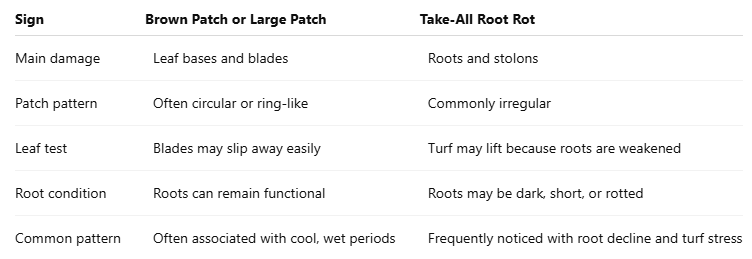
Take-all root rot vs brown patch is an important comparison because both can leave a St. Augustine lawn yellow, thin, or brown.
How to Treat Brown Patch Fungus
The best answer to how to treat brown patch fungus starts with reducing conditions that help the disease remain active. A fungicide can be appropriate in some situations, but moisture and maintenance practices also need attention.
Water early enough for the leaf surface to dry during the day. Avoid unnecessary evening irrigation and do not add water just because infected turf looks brown.
Heavy nitrogen can encourage tender growth and increase disease pressure. Fertilizer decisions should match the grass type, season, lawn condition, and soil needs rather than follow an automatic schedule.
Areas beside fences, under trees, or in low spots can stay wet longer. Correcting irrigation overspray, clearing heavy debris, and addressing drainage can reduce prolonged moisture.
Texterra's landscape maintenance checklist offers a useful framework for reviewing routine property care.
Brown patch fungus treatment may include a turf fungicide specifically labeled for the disease and grass type. Application timing, rate, repeat intervals, and watering directions vary by product, so follow the label exactly.
Professional brown patch treatment in North Texas may be worth considering when damage is extensive, recurring, or difficult to identify. If pesticide application is needed, use an appropriately qualified provider.
Homeowners searching how to treat brown patch in St. Augustine grass should focus on stopping favorable disease conditions while protecting healthy turf.
A practical St. Augustine brown patch treatment plan includes:
Texterra Lawn & Landscaping provides lawn and grounds maintenance for homeowners who want mowing, edging, cleanup, and recurring property care handled consistently.
Yes. Brown patch can return when the same combination of moisture, temperature, and turf conditions develops again.
Fungicide alone does not correct poor drainage, excess irrigation, dense shade, or maintenance habits that keep grass wet. Effective lawn disease treatment in DFW should look at both the visible symptoms and the property conditions contributing to them.
After the lawn improves, continue checking previously affected areas during damp fall and spring weather. Early changes are easier to address than a large expanding patch.
Random watering, fertilizer, or chemical applications can add stress when the real cause of lawn discoloration has not been identified.
Texterra Lawn & Landscaping provides lawn and landscaping services for homeowners in Grapevine and surrounding North Texas communities. You can see examples of Texterra's completed lawn and landscape work and local customer feedback on the company's Google Business Profile.
If your St. Augustine lawn develops spreading yellow or brown areas this fall, contact Texterra Lawn & Landscaping to discuss the lawn condition and ongoing maintenance needs.
Brown patch can affect warm-season lawns in Grapevine when mild temperatures and extended moisture favor fungal activity. St. Augustine lawns with a previous history of the disease deserve extra attention during damp weather.
Not always. Large patches mainly affect leaf tissue and leaf bases. The roots and stolons may remain alive, allowing the grass to produce new leaves as conditions improve.
Usually, extra watering is not the solution. Prolonged moisture can support fungal activity. Check the soil and irrigation coverage before increasing watering.
Yes. Both can cause yellowing, thinning, and brown turf. Take-all root rot damages the root system, while large patches commonly damage tissue near the base of the leaves.
Consider professional help when patches spread quickly, return each season, or are difficult to distinguish from irrigation, insect, or root problems. Accurate identification can prevent unnecessary treatment and additional turf stress.